
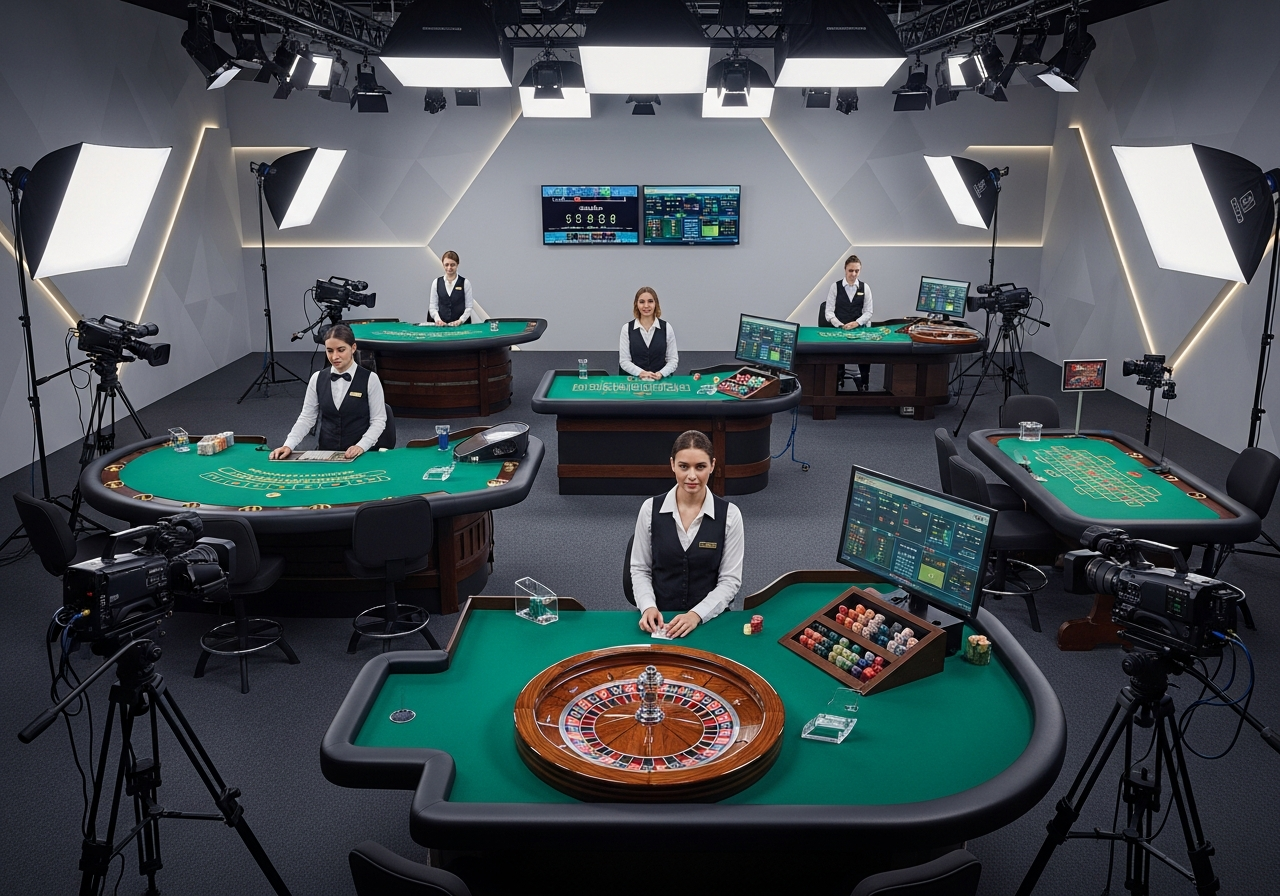
The live dealer gaming industry has experienced remarkable growth over the past decade, transforming from a niche offering to a cornerstone of online casino entertainment. With the global live dealer market valued at over $1.2 billion and projected to reach $2.8 billion by 2027, strategic studio locations have become critical to provider success. Europe maintains its position as the undisputed leader, hosting approximately 65% of the world’s live dealer studios, with Eastern European countries like Latvia and Romania serving as primary hubs for industry giants Evolution Gaming and Playtech.
The United States has emerged as the fastest-growing market, with regulated states rapidly establishing local studio operations to serve their jurisdictions. Evolution Gaming alone operates studios across six US states, while Playtech and emerging providers like Ezugi expand their North American footprint. This geographic diversification reflects the industry’s response to regulatory requirements, player preferences, and operational efficiency demands that define modern live dealer gaming.
Why Studio Locations Matter for Live Dealer Games
Studio locations serve as the backbone of live dealer operations, influencing everything from regulatory compliance to player experience quality. The choice of where to establish studios directly impacts a provider’s ability to access specific markets, maintain operational efficiency, and deliver seamless gaming experiences across multiple time zones. Regulatory considerations often dictate location decisions, as many jurisdictions require local studio operations for market access, while talent availability and infrastructure quality determine operational success.
The distinction between in-casino streaming and purpose-built studios adds another layer of complexity to location strategy. In-casino locations offer authentic casino atmospheres but may face space constraints and operational challenges, while purpose-built facilities provide optimal control over lighting, sound, and production quality. Market efficiency drives providers to establish regional hubs that can serve multiple markets simultaneously, reducing operational costs while maintaining service quality across diverse player bases.
Latency considerations play a crucial role in studio placement, as players expect real-time interaction with dealers and seamless gameplay. Strategic positioning near major internet infrastructure hubs ensures optimal connection speeds, while proximity to target markets reduces technical delays that can negatively impact player satisfaction and retention rates.
Regulation and Market Access
Jurisdictional licensing requirements often mandate local studio presence for market access, making location decisions regulatory necessities rather than mere operational preferences. Providers must navigate complex compliance frameworks that vary significantly across markets, with some jurisdictions requiring physical studio presence within their borders for licensing approval.
- Local licensing requirements in regulated US states mandate in-jurisdiction studio operations
- European Union passporting allows single-license access to multiple markets from approved locations
- Regulatory oversight benefits include streamlined compliance monitoring and faster dispute resolution
- Tax incentives in certain jurisdictions reduce operational costs for qualifying studio operations
- Market access timing advantages enable faster entry into newly regulated territories
- Compliance cost reduction through centralized operations in favorable regulatory environments
Talent Pools and Operations
The availability of skilled, multilingual dealers represents a critical factor in studio location decisions, as live dealer games depend heavily on human interaction quality. Eastern European countries have emerged as preferred locations due to their combination of language skills, professional training capabilities, and competitive labor costs. Major studios typically employ between 200-800 dealers across multiple shifts to maintain 24/7 operations, requiring substantial local talent pools to support recruitment and retention needs.
Operational scalability considerations influence studio size planning, with flagship facilities often spanning 10,000-50,000 square feet to accommodate dozens of gaming tables, broadcast equipment, and support infrastructure. The largest Evolution Gaming studios in Latvia employ over 1,000 staff members, while smaller regional operations may function effectively with 50-100 employees, depending on market coverage requirements and operational scope.
Europe: The Global Live Dealer Epicenter
Europe’s dominance in live dealer gaming stems from its combination of favorable regulations, skilled workforce, and central geographic position that enables efficient service delivery to global markets. The region hosts the headquarters and primary operations of virtually every major live dealer provider, with Latvia, Romania, and the United Kingdom serving as primary operational hubs. This concentration has created a mature ecosystem of supporting services, from specialized equipment suppliers to dealer training academies.
The European market’s regulatory maturity provides stability and predictability that attracts long-term investment in studio infrastructure, while the region’s diverse linguistic capabilities enable providers to serve markets worldwide with native-speaking dealers. Time zone positioning allows European studios to effectively serve both Asian and American markets during extended operating hours.
| Country | Key Providers | Notable Studios/Casinos | Launch Year |
|---|---|---|---|
| Latvia | Evolution Gaming, Playtech | Riga Headquarters, Olympic Casino | 2006 |
| Romania | Evolution Gaming, Playtech, Ezugi | Bucharest Studios, Casino Bucharest | 2010 |
| United Kingdom | Evolution Gaming, Playtech | Grosvenor Casino, Hippodrome | 2008 |
| Malta | Evolution Gaming, NetEnt Live | Ta’ Xbiex Studios | 2013 |
| Spain | Evolution Gaming, Pragmatic Play | Madrid Studios | 2015 |
| Italy | Evolution Gaming, Playtech | Saint Vincent Casino | 2014 |
| Belgium | Evolution Gaming | Grand Casino Brussels | 2016 |
| Lithuania | Evolution Gaming | Vilnius Studios | 2018 |
Latvia and Romania Hubs
Latvia serves as Evolution Gaming’s global headquarters and largest operational hub, with the Riga facility spanning over 40,000 square feet and employing more than 1,200 staff members across multiple shifts. The country’s EU membership provides regulatory advantages, while its skilled multilingual workforce and competitive operational costs create an ideal environment for large-scale live dealer operations. Evolution’s Latvian operations serve as the template for global expansion, featuring state-of-the-art broadcast technology and capacity for over 100 simultaneous gaming tables.
Romania has emerged as the second-largest European hub, with Evolution Gaming’s Bucharest facility complementing its Latvian operations and Playtech establishing significant presence in the region. The Romanian studios focus heavily on serving Southern and Eastern European markets, with dealers specializing in regional languages and cultural preferences. Ezugi has also established notable operations in Romania, leveraging the country’s technical infrastructure and talent pool to serve emerging markets across Europe and beyond.
Both countries benefit from robust telecommunications infrastructure, favorable tax environments, and government support for technology sector growth. The concentration of live dealer operations has created specialized training programs at local universities and vocational schools, ensuring sustainable talent pipelines for continued industry expansion. These hubs process millions of gaming rounds monthly, generating substantial economic impact through employment and technology investments.
UK and Other Key Sites
The United Kingdom maintains its position as a crucial live dealer market through a combination of in-casino streaming locations and purpose-built studios, serving both domestic and international operators. UK studios benefit from the country’s mature gambling regulation framework and English-speaking dealer pool, making them particularly valuable for serving global English-speaking markets during European business hours.
- Grosvenor Casino locations across London providing authentic casino atmosphere streaming
- Hippodrome Casino London featuring dedicated live dealer streaming areas
- Evolution Gaming’s purpose-built UK studios serving domestic and international markets
- Playtech’s London-area facilities focusing on premium gaming experiences
- Aspers Casino locations offering multi-table streaming capabilities
- The Ritz Club London providing exclusive high-limit gaming streams
- Dusk Till Dawn Casino Manchester delivering regional market coverage
North America: Regulated US State Studios
The United States has rapidly emerged as a critical live dealer market, with regulated states requiring local studio operations for licensing compliance and market access. Evolution Gaming leads this expansion with dedicated facilities across multiple states, while other providers follow suit to capture growing market opportunities. The US market’s unique regulatory structure, with individual state licensing requirements, has necessitated a distributed approach to studio development rather than centralized hub operations seen in Europe.
State-level studios serve dual purposes of regulatory compliance and market optimization, providing locally relevant gaming experiences while meeting strict oversight requirements. The American market’s size and growth potential justify substantial infrastructure investments, with newer facilities incorporating advanced technology and expanded game libraries to differentiate from European operations.
| State | Providers | Studio Location | Launch Year | Operators Served |
|---|---|---|---|---|
| New Jersey | Evolution Gaming, Playtech | Atlantic City Studios | 2018 | 15+ Licensed Operators |
| Pennsylvania | Evolution Gaming | Philadelphia Region | 2019 | 12+ Licensed Operators |
| Michigan | Evolution Gaming | Detroit Area | 2021 | 10+ Licensed Operators |
| Connecticut | Evolution Gaming | Tribal Casino Facilities | 2021 | 2 Licensed Operators |
| West Virginia | Evolution Gaming | Charles Town | 2020 | 5 Licensed Operators |
| Delaware | Evolution Gaming | Dover Area | 2022 | 3 Licensed Operators |
US Expansion Timeline
The US live dealer expansion began with New Jersey’s market launch in 2018, establishing the template for state-level compliance and operational requirements that would be replicated across subsequent markets. Evolution Gaming’s pioneering Atlantic City studio demonstrated the viability of US operations, leading to rapid expansion as additional states legalized online casino gaming. The timeline reflects careful market prioritization based on population size, regulatory clarity, and competitive landscape considerations.
Pennsylvania’s 2019 launch marked the second major milestone, followed by rapid acceleration during the 2020-2022 period as the COVID-19 pandemic drove online gaming adoption and state governments sought new revenue sources. Michigan’s substantial market size made it a priority target, while Connecticut’s tribal gaming structure required specialized operational approaches. The chronological expansion reflects both regulatory approval timelines and provider capacity constraints as studios require 12-18 months from planning to operational launch.
Future expansion plans target additional states considering online casino legalization, with providers maintaining flexibility to rapidly deploy studio operations as new markets emerge. The US expansion strategy differs significantly from European hub models, requiring distributed infrastructure investments but offering protected market access and localized service delivery advantages that justify the additional complexity and costs.
Asia and Emerging Markets
Asia represents the most diverse and rapidly evolving live dealer market, with the Philippines serving as the primary operational hub for providers targeting regional and international markets. The region’s time zone coverage enables 24-hour global service delivery, while emerging markets like Georgia offer alternative operational bases with competitive advantages in specific market segments. Cultural preferences for live dealer games, particularly baccarat and other traditional Asian games, drive substantial demand that regional studios are positioned to serve effectively.
Emerging markets beyond Asia continue to develop live dealer capabilities, though often through partnerships with established providers rather than independent studio development. The concentration of expertise and infrastructure investment required for competitive live dealer operations creates natural barriers to entry that favor established regional hubs over distributed development approaches.
- Philippines – Cebu and Manila hubs serving Asian and global markets with over 20 active studios
- Georgia – Tbilisi emerging as Eastern European alternative with competitive operational costs
- Armenia – Yerevan facilities focusing on regional market coverage and specific operator partnerships
- Costa Rica – Central American hub targeting Latin American markets and timezone coverage
- Canada – Vancouver and Toronto facilities preparing for potential regulated market expansion
- Czech Republic – Prague operations serving Central European markets with local language capabilities
Philippines Studio Cluster
The Philippines has established itself as Asia’s primary live dealer hub, with major providers operating extensive facilities across Metro Manila and Cebu to serve both regional Asian markets and global operator needs. The country’s combination of English-speaking dealers, competitive operational costs, and favorable business environment has attracted substantial investment from international providers seeking to establish Asian market presence.
| Provider | Location | Games Focus |
|---|---|---|
| Evolution Gaming | Metro Manila | Asian Baccarat, Roulette |
| Playtech | Makati Business District | Multi-language Blackjack |
| Ezugi | Cebu City | Dragon Tiger, Baccarat |
| Asia Gaming | Manila Bay Area | Traditional Asian Games |
| VIVO Gaming | Bonifacio Global City | Speed Baccarat, Roulette |
Georgia’s Rapid Growth
Georgia has emerged as an unexpected live dealer hub, with Tbilisi attracting providers seeking alternatives to traditional European locations while maintaining access to skilled multilingual talent and competitive operational costs. The country’s strategic location between Europe and Asia, combined with government support for technology sector development, has created favorable conditions for live dealer studio establishment. Several providers have established significant operations in Georgia, serving both regional markets and broader international operator needs.
The Georgian market benefits from relaxed regulatory requirements compared to EU jurisdictions, while still maintaining operational standards acceptable to international operators and their regulators. This positioning has attracted providers seeking flexible operational bases that can adapt quickly to changing market demands and regulatory requirements across multiple target markets.
Top Providers’ Studio Networks
The global live dealer industry is dominated by a relatively small number of major providers who operate extensive international studio networks, with Evolution Gaming maintaining the largest and most geographically diverse operational footprint. These networks reflect strategic decisions about market coverage, regulatory compliance, and operational efficiency that determine competitive positioning in the global marketplace. The scale and distribution of studio operations directly correlate with provider market share and revenue generation capabilities.
Provider network strategies differ based on target markets, regulatory requirements, and operational philosophies, with some focusing on centralized hub operations while others pursue distributed approaches that prioritize local market access and compliance flexibility. The most successful providers have developed networks that balance operational efficiency with market coverage requirements, creating sustainable competitive advantages through geographic positioning and operational scale.
| Provider | Primary Locations | Studio Count | Specialties |
|---|---|---|---|
| Evolution Gaming | Latvia, Romania, US, Philippines | 15+ | Game Shows, Premium Tables |
| Playtech | Latvia, Romania, Philippines | 8+ | Classic Games, Multi-language |
| Ezugi | Romania, Philippines, Belgium | 6+ | Asian Games, Speed Gaming |
| Pragmatic Play | Romania, Georgia, Malta | 5+ | Regional Focus, Local Languages |
| LuckyStreak | Malta, Curacao | 3+ | Mobile-first, Compact Tables |
| NetEnt Live | Malta (Evolution owned) | 2+ | Premium Branded Tables |
| Authentic Gaming | Various Casino Locations | 20+ | In-casino Streaming |
| VIVO Gaming | Philippines, Costa Rica | 4+ | LatAm Markets, Multi-timezone |
| Asia Gaming | Philippines, Cambodia | 3+ | Asian Market Focus |
| Atmosfera | Armenia, Georgia | 2+ | Eastern European Markets |
Evolution’s Worldwide Dominance
Evolution Gaming’s global studio network represents the industry’s most comprehensive operational infrastructure, with facilities strategically positioned to serve all major regulated markets while maintaining 24/7 global coverage. The company’s hub-and-spoke model centers on major facilities in Latvia and Romania while extending through regional studios that provide local market access and compliance capabilities. This network architecture enables Evolution to serve over 600 operator customers across more than 30 regulated markets worldwide.
The strategic distribution of Evolution’s studios reflects careful market analysis and regulatory planning, with each facility designed to optimize specific market coverage and operational efficiency requirements. The company’s expansion strategy prioritizes regulated markets with substantial growth potential, leading to significant investments in US state-level facilities and continued European market expansion. Evolution’s network advantage creates substantial barriers to competitive entry and enables cross-selling opportunities across its comprehensive game portfolio.
- European Hub Operations in Latvia, Romania, Lithuania spanning over 100,000 square feet combined
- North American State Studios covering New Jersey, Pennsylvania, Michigan, Connecticut, West Virginia, Delaware
- Asian Pacific Operations in Philippines serving regional and international markets
- Specialized Game Show Studios featuring unique Entertainment-focused productions
- Premium VIP Studios offering exclusive high-limit gaming experiences
- Mobile-Optimized Studios designed specifically for smartphone and tablet gameplay
- Branded Casino Studios partnering with major land-based casino properties
In-Casino vs Purpose-Built Studios
The choice between in-casino streaming and purpose-built studio operations represents one of the most significant strategic decisions facing live dealer providers, with each approach offering distinct advantages and challenges that influence market positioning and operational efficiency. In-casino streaming provides authentic casino atmospheres that appeal to players seeking genuine gambling experiences, while purpose-built studios offer optimal control over production quality and operational efficiency that can reduce costs and improve scalability.
Market trends indicate growing demand for both approaches, with operators increasingly offering mixed portfolios that combine authentic casino environments with specialized studio productions. The most successful providers have developed expertise in both operational models, enabling them to match studio types with specific market requirements and player preferences. Real-world examples demonstrate that hybrid approaches often deliver optimal results, combining authentic casino streaming for traditional games with purpose-built facilities for specialized content and game show formats.
The operational complexity differences between in-casino and purpose-built facilities create distinct competitive advantages and challenges, with in-casino operations requiring partnership management and facility coordination while purpose-built studios demand significant infrastructure investments and ongoing operational oversight. Provider success increasingly depends on strategic portfolio decisions that balance authentic experiences with operational efficiency across diverse market requirements and regulatory environments.
In-Casino Streaming Advantages
In-casino streaming operations provide unmatched authenticity by broadcasting from active casino floors, creating genuine gambling atmospheres that purpose-built studios cannot replicate effectively. Players experience real casino environments complete with ambient sounds, natural lighting variations, and the presence of physical casino patrons, enhancing immersion and trust in game integrity. The authentic setting appeals particularly to experienced gambling customers who value traditional casino experiences and may be skeptical of purely digital environments.
- Authentic casino atmosphere with genuine ambient sounds and natural lighting conditions
- Real patron presence creating dynamic gaming environments that change throughout operating hours
- Established casino credibility and brand recognition enhancing player trust and confidence
- Lower initial infrastructure investment requirements compared to purpose-built facility development
- Marketing synergies between online streaming and physical casino operations
- Regulatory advantages in jurisdictions favoring established casino properties
Purpose-Built Efficiency
Purpose-built studios offer superior operational control and production quality through specialized design that optimizes every aspect of live dealer broadcasting, from lighting and acoustics to camera angles and dealer positioning. These facilities enable consistent content quality regardless of external factors, while providing scalability options that in-casino locations cannot match due to space constraints and operational conflicts with physical casino operations.
| Type | Pros | Cons |
|---|---|---|
| In-Casino | Authentic atmosphere, established credibility | Limited control, space constraints |
| Purpose-Built | Optimal production quality, scalability | High infrastructure costs, artificial feel |
| Hybrid Model | Best of both approaches, flexibility | Complex operations, higher costs |
| Mobile-Optimized | Smartphone compatibility, modern appeal | Limited traditional appeal, tech dependency |
Studio Maps and Visual Guides
Interactive studio location maps have become essential tools for operators and industry professionals seeking to understand the global distribution of live dealer capabilities and provider networks. These visual representations illustrate the concentration of operations in key regional hubs while highlighting emerging markets and expansion opportunities that influence strategic planning decisions. Modern mapping platforms integrate real-time operational data, regulatory information, and market coverage details that enable sophisticated analysis of provider capabilities and competitive positioning.
Visual guides complement traditional studio lists by providing geographic context that reveals strategic patterns in provider expansion and market development, helping operators understand coverage gaps and identify partnership opportunities. The most comprehensive mapping solutions incorporate time zone overlays, regulatory boundary indicators, and connectivity quality metrics that influence operational decision-making and partnership strategies in the global live dealer marketplace.
Key Regions on the Map
Navigation through global studio locations reveals distinct regional clusters that correspond to regulatory environments, market opportunities, and operational advantages that drive provider location decisions. Understanding these geographic patterns enables more effective strategic planning and partnership development across the international live dealer ecosystem.
- European Core – Latvia and Romania hub operations with extensive coverage across EU markets
- North American Expansion – US state-by-state studio development following regulatory approvals
- Asian Pacific Hub – Philippines-centered operations serving regional and global markets
- Emerging Markets – Georgia, Armenia, and other developing hubs offering competitive alternatives
- Specialty Locations – Malta, Costa Rica, and niche markets serving specific operational requirements
Future Trends in Studio Locations
The live dealer industry’s location strategy continues evolving in response to regulatory changes, market opportunities, and technological advances that reshape operational requirements and competitive dynamics. North American expansion represents the most significant near-term opportunity, with additional US states considering online casino legalization and Canadian provinces exploring regulated market development. Asian market growth, particularly in emerging jurisdictions, offers substantial long-term potential despite regulatory uncertainties that complicate expansion planning.
Technological advances in streaming quality, mobile optimization, and virtual reality integration may influence future location decisions by changing infrastructure requirements and player experience expectations. The industry’s maturation suggests consolidation around proven hub locations while maintaining flexibility for rapid expansion into newly regulated markets that offer substantial growth opportunities. Climate considerations and sustainability requirements are beginning to influence location decisions as major providers commit to carbon-neutral operations.
The post-pandemic landscape has accelerated online gaming adoption while demonstrating the resilience of distributed operational models that reduce geographic concentration risks. Future expansion strategies increasingly emphasize operational redundancy and market access diversification rather than pure cost optimization, reflecting lessons learned from recent market disruptions and regulatory changes that impacted centralized operations.
- US market expansion into additional states considering online casino regulation legislation
- Canadian provincial markets development following federal framework implementation
- Latin American growth opportunities in Brazil, Mexico, and regulated regional markets
- Asian market penetration in emerging jurisdictions with favorable regulatory environments
- African market development as telecommunications infrastructure improves and regulation evolves
- Sustainability requirements driving location decisions toward renewable energy and carbon-neutral operations
- Hybrid studio models combining in-casino authenticity with purpose-built efficiency advantages
Emerging Hubs to Watch
Several emerging markets show strong potential for live dealer hub development, driven by improving regulatory frameworks, infrastructure investments, and competitive operational environments that may challenge established hub locations. These developing markets offer opportunities for providers seeking alternatives to saturated traditional locations while maintaining access to necessary talent and infrastructure capabilities.
| Region | Potential Providers | Drivers |
|---|---|---|
| Canada | Evolution, Playtech, Pragmatic | Provincial regulation, proximity to US markets |
| Czech Republic | Local and international providers | EU access, competitive costs, skilled workforce |
| Mexico | VIVO Gaming, regional specialists | LatAm market access, timezone coverage |
| South Africa | Emerging providers | African market development, English-speaking talent |
| Brazil | Major international providers | Massive market potential, regulatory development |